
On 29 May, we hosted the latest edition of the Wellbeing Event, organised by ESPORG, at our La Jonquera station. The event brought together institutions, European associations, shippers and transport companies to discuss some of the key challenges in the sector. The shortage of drivers, the need for more secure infrastructure, digitalisation, and the transformation of secure parking areas into spaces for well-being were among the topics at the heart of the discussion.
La Jonquera: a strategic hub for freight transport systems in Europe
La Jonquera is one of Europe’s leading logistics hubs. It is estimated that between 10,000 and 11,000 lorries pass through this corridor every day, a fact that makes this border crossing an ideal place to gain an insight into the real needs of the international transport sector and the professionals who make it possible.
We are therefore particularly proud to have hosted an event that brought together some of the sector’s leading voices to discuss how to create a safer, more efficient and more people-centred transport system. Because if there was one idea that everyone agreed on throughout the day, it was this: the future of transport necessarily involves putting the professional driver at the heart of it all.
Wellbeing Event: a European initiative to promote the wellbeing of professional drivers
ESPORG’s Wellbeing Events aim to promote a more human-centred vision of road transport, placing drivers’ health, rest and well-being as key factors in road safety and operational efficiency.
The event, held in La Jonquera, brought together leading speakers from the transport and logistics sector, including Dirk Penasse (ESPORG), Nuria Lacaci (Spanish Shippers’ Association, ACE), Jordi Espín (European Shippers’ Council, ESC) and Druselia Betea (European Wellbeing Initiative), alongside institutional representatives such as La Jonquera Town Council, with the participation of Rafael Medinilla, Deputy Mayor.
The meeting was also attended by companies from the transport and logistics sector, such as OnTurtle, Mowiz Truck, SNAP, TRAVIS Road Services and Lodetrain, which contributed to the analysis and discussion of the sector’s main challenges. All participants shared their experiences and thoughts on the future of road transport in Europe.
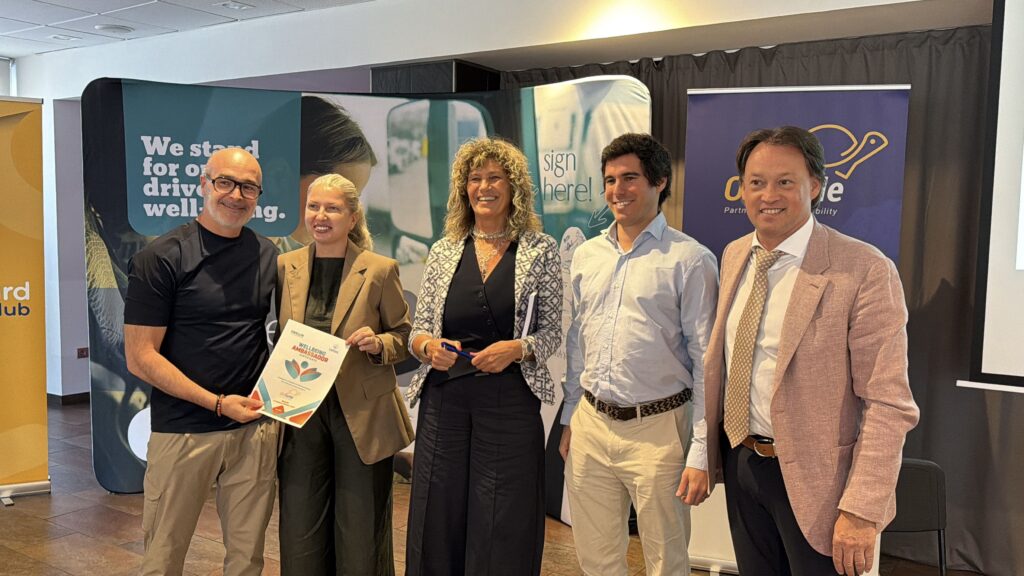
From left to right: Pere Pintó, Business Development Director at OnTurtle; Druselia Betea, Director of the European Wellbeing Initiative; Marta Fàbregas, CEO of OnTurtle; Pablo Combalía, Business Development Manager at OnTurtle; and Dirk Penasse, General Manager of ESPORG.
Wellbeing Certification: a step further
One of the main conclusions of the meeting was the need to recognise driver well-being as a key factor in ensuring the sustainability of road transport. The participants agreed that the shortage of drivers is one of the major challenges facing Europe and that, in order to attract new talent and retain current professionals, it is essential to offer safe, comfortable and decent working conditions.
In this context, the event organisers proposed the creation of a future well-being certification scheme designed to take the current concept of secure parking areas to the next level, incorporating criteria relating to rest, comfort and the driver’s quality of life whilst on the road.
Three panel discussions to examine the future of road transport
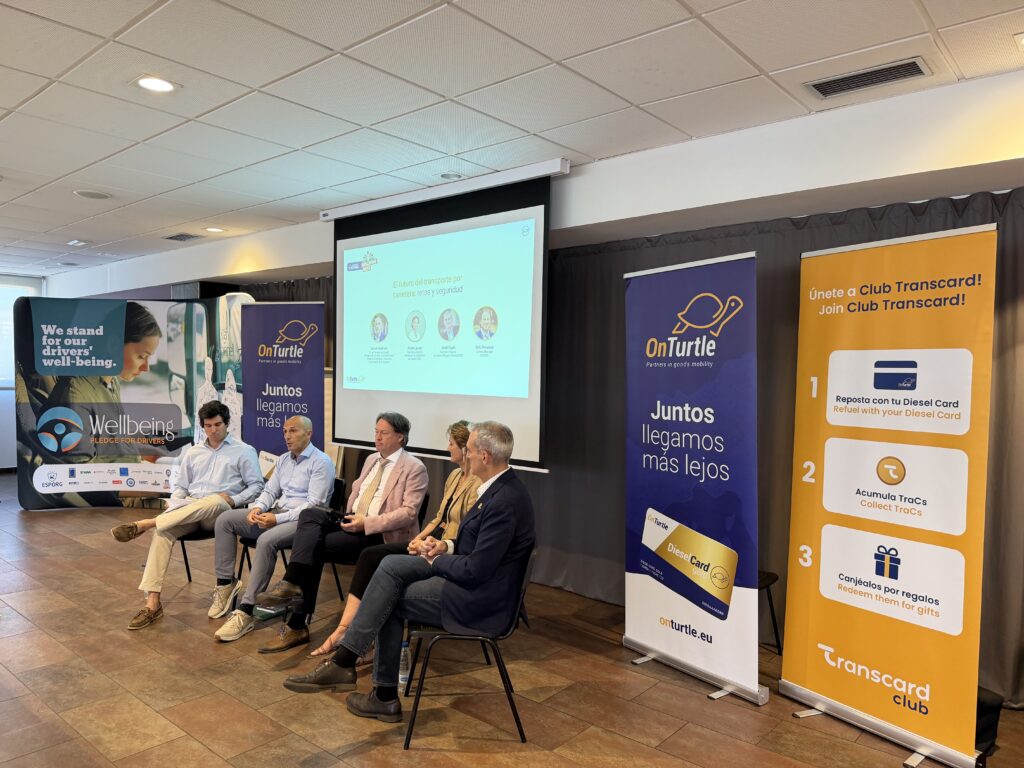
ESPORG’s Wellbeing Event in La Jonquera was structured around three panel discussions, bringing together experts from the transport and logistics sectors, as well as institutional representatives, to address the main challenges facing road transport in Europe from different perspectives.
Firstly, the topic “The future of road transport: structural challenges and safety” was discussed, with contributions from Rafael Medinilla (La Jonquera Town Council); Jordi Espín (European Shippers’ Council, ESC); Nuria Lacaci (Spanish Shippers’ Association, ACE); and Dirk Penasse (ESPORG). The debate focused on the shortage of drivers, the need for more secure infrastructure, and the reduction of red tape between European countries. It also highlighted the importance of shared responsibility among all actors in the logistics chain in order to ensure a more efficient and sustainable system.
Secondly, the discussion focused on “The hauliers´ perspective: well-being, digitalisation and talent management”. A panel discussion featuring David Lozano (Ruta Transport Business School); Juan Manuel Moreno (Nuppec Logística); Raúl Mateos (Lodetrain); and Druselia Betea (European Wellbeing Initiative). This session addressed the role of driver well-being as a strategic factor in the sector’s competitiveness, the impact of digitalisation on route planning, and the growing difficulty in attracting and retaining talent due to current conditions in the transport sector.
Finally, the focus turned to “Secure parking, digitalisation and the future of the logistics ecosystem”, with contributions from Jorge Bernet (Mowiz Truck); Rui Silva (SNAP); Gerard Flores (TRAVIS Road Services); and Pere Pinto (OnTurtle). The discussion focused on the evolution of the concept of secure parking areas towards spaces that combine safety, comfort and well-being, as well as the role of digitalisation in improving the driver’s experience and the planning of their rest breaks.
As a common conclusion from the three panel discussions, the participants agreed that the future of road transport hinges on three key areas: improving infrastructure, digitalising the sector, and recognising driver well-being as a strategic element for the sustainability of the European logistics system.
From discussion to the real-life driver experience
Following the panel discussions, attendees were able to tour the facilities at our La Jonquera station, a leading centre for services and safety in professional road transport in Europe.
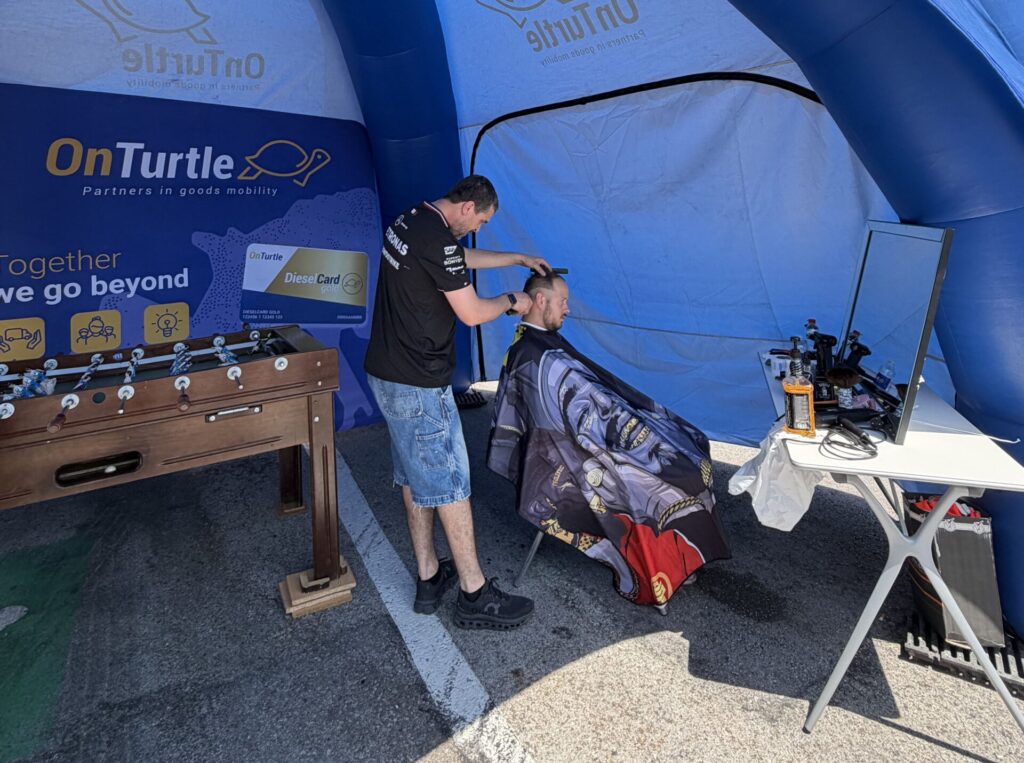
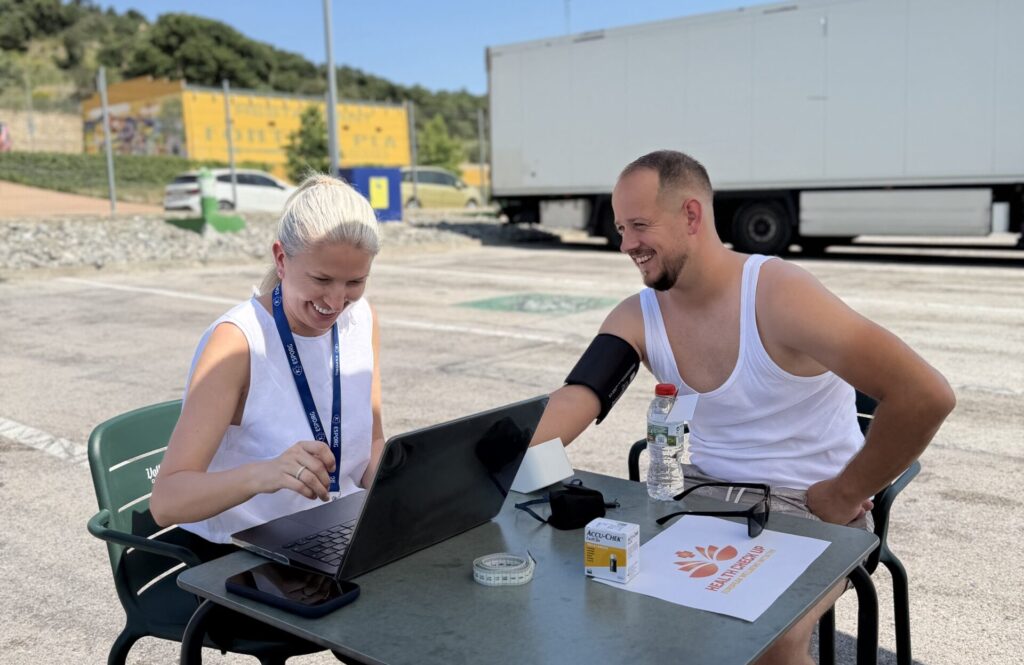
The day continued with the focus on the drivers who make the sector’s activity possible every day, through various initiatives aimed at their well-being. These included barber services, table football and small gifts for professional drivers who stopped at the station that day.
A way of putting the core message of the Wellbeing Event into practice: not only discussing driver well-being, but actually incorporating it into their day-to-day experience on the road.